
The Complete Guide to Foundation Makeup: What to Buy and How to Select Your Perfect Match
Finding the perfect foundation can feel overwhelming with countless formulas, shades, and application methods available today. Your foundation serves as the canvas for your entire makeup look, making it one of the most crucial beauty investments you'll make. Whether you're a makeup novice or looking to upgrade your current routine, this comprehensive guide will walk you through everything you need to know about selecting and applying foundation makeup that enhances your natural beauty and lasts all day.
The key to flawless foundation lies in understanding your unique skin characteristics and matching them with the right product formula and shade. A well-chosen foundation should feel like a second skin – seamlessly blending with your natural complexion while providing the coverage and finish you desire. With the right knowledge and techniques, you can achieve that coveted no-makeup makeup look or build up to full coverage for special occasions.
Understanding Your Skin: The Foundation of Perfect Foundation
Identifying Your Skin Type
Before diving into foundation selection, understanding your skin type is essential for choosing a formula that works harmoniously with your complexion. Different skin types require different foundation formulations to achieve optimal results and longevity.
Dry Skin produces less natural oil and often feels tight or flaky. If you have dry skin, you'll benefit from hydrating liquid or cream foundations that contain moisturizing ingredients like hyaluronic acid and glycerin. These formulas provide a dewy finish that adds luminosity to your complexion.
Oily Skin tends to produce excess sebum, especially in the T-zone. For oily skin types, matte or oil-free foundations work best to control shine and prevent your makeup from sliding off throughout the day. Powder foundations can also be excellent for oil control.
Combination Skin features both oily and dry areas, typically with an oily T-zone and drier cheeks. Satin-finished liquid foundations provide the perfect balance, offering hydration where needed while controlling oil in problem areas.
Sensitive Skin requires gentle, fragrance-free formulations with soothing ingredients like niacinamide and aloe vera. Look for hypoallergenic and non-comedogenic foundations that won't irritate or clog pores.
Determining Your Undertone
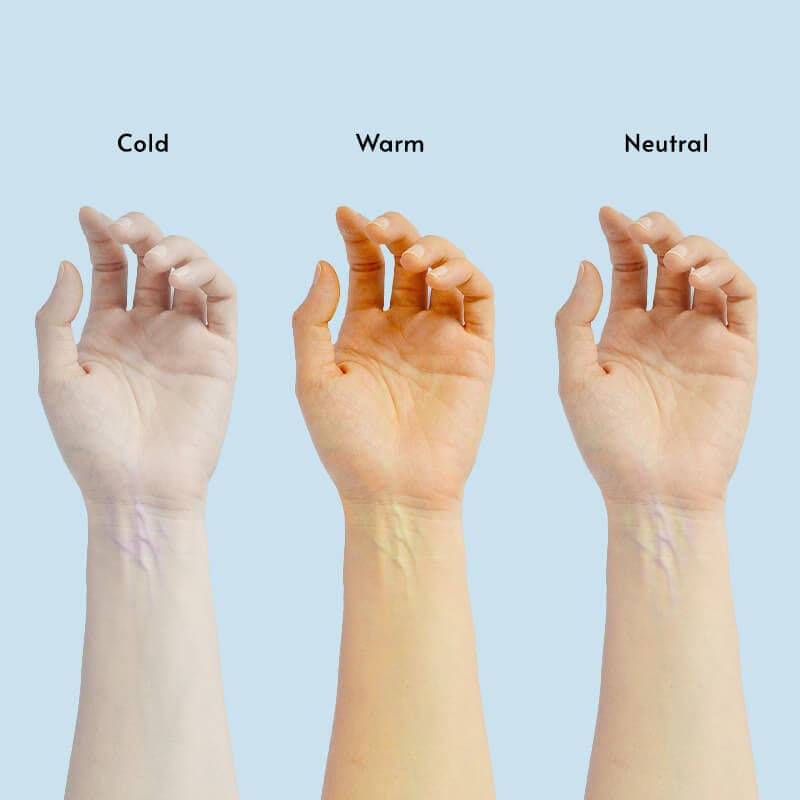
Understanding your skin's undertone is arguably the most crucial step in finding your perfect foundation match. Your undertone never changes, even as your surface skin tone may vary with sun exposure or seasonal changes. There are three main undertone categories:
Cool Undertones feature hints of pink, red, or blue beneath the skin surface. If your veins appear blue or purple on your inner wrist, and silver jewelry is more flattering than gold, you likely have cool undertones.
Warm Undertones display golden, peachy, or yellow hues. Green-tinted veins and a preference for gold jewelry typically indicate warm undertones.
Neutral Undertones represent a balanced mix of both cool and warm tones. If you can wear both silver and gold jewelry equally well, and your veins appear blue-green, you likely have neutral undertones.
Pro Tip: Hold a white piece of paper or fabric next to your face in natural light. If your skin appears rosy against white, you're cool-toned. If you appear golden or yellow, you're warm-toned. If it's difficult to tell, you're likely neutral.
Types of Foundation Formulas: Finding Your Perfect Match
Understanding the different foundation formulas available will help you select the best option for your skin type and desired finish. Each formula offers unique benefits and application characteristics.
Liquid Foundation
Liquid foundations are the most versatile and popular choice, suitable for most skin types and offering buildable coverage from sheer to full. They blend easily and provide a natural finish that can be adjusted from matte to dewy depending on the specific formula.
Best for: All skin types, particularly normal to dry skin
Coverage: Sheer to full, buildable
Finish: Varies from matte to dewy
Application: Brush, sponge, or fingers
Powder Foundation
Powder foundations offer excellent oil control and are ideal for oily or combination skin types. They can be used wet for more coverage or dry for a lighter finish. Powder foundations provide a matte finish and are easy to touch up throughout the day.
Best for: Oily and combination skin
Coverage: Light to medium
Finish: Matte
Application: Brush or sponge
Cream Foundation
Cream foundations provide the highest coverage and are excellent for dry or mature skin. They offer a smooth, satin finish and are particularly effective at covering blemishes, scars, and discoloration.
Best for: Dry and mature skin
Coverage: Medium to full
Finish: Satin to dewy
Application: Brush, sponge, or fingers
Stick Foundation
Stick foundations offer convenience and portability with full coverage in a compact format. They're excellent for targeted application and touch-ups but can be more challenging to blend evenly.
Best for: All skin types, travel-friendly
Coverage: Medium to full
Finish: Varies
Application: Direct application, then blend with brush or sponge
Tinted Moisturizer and Serum Foundations
These lightweight formulas combine skincare benefits with sheer coverage, perfect for achieving a natural, no-makeup look. Serum foundations, in particular, are trending in 2025 for their skincare-infused benefits.
Best for: All skin types, especially for natural looks
Coverage: Sheer to light
Finish: Natural to dewy
Application: Fingers or sponge
Foundation Coverage Levels: Choosing Your Desired Look
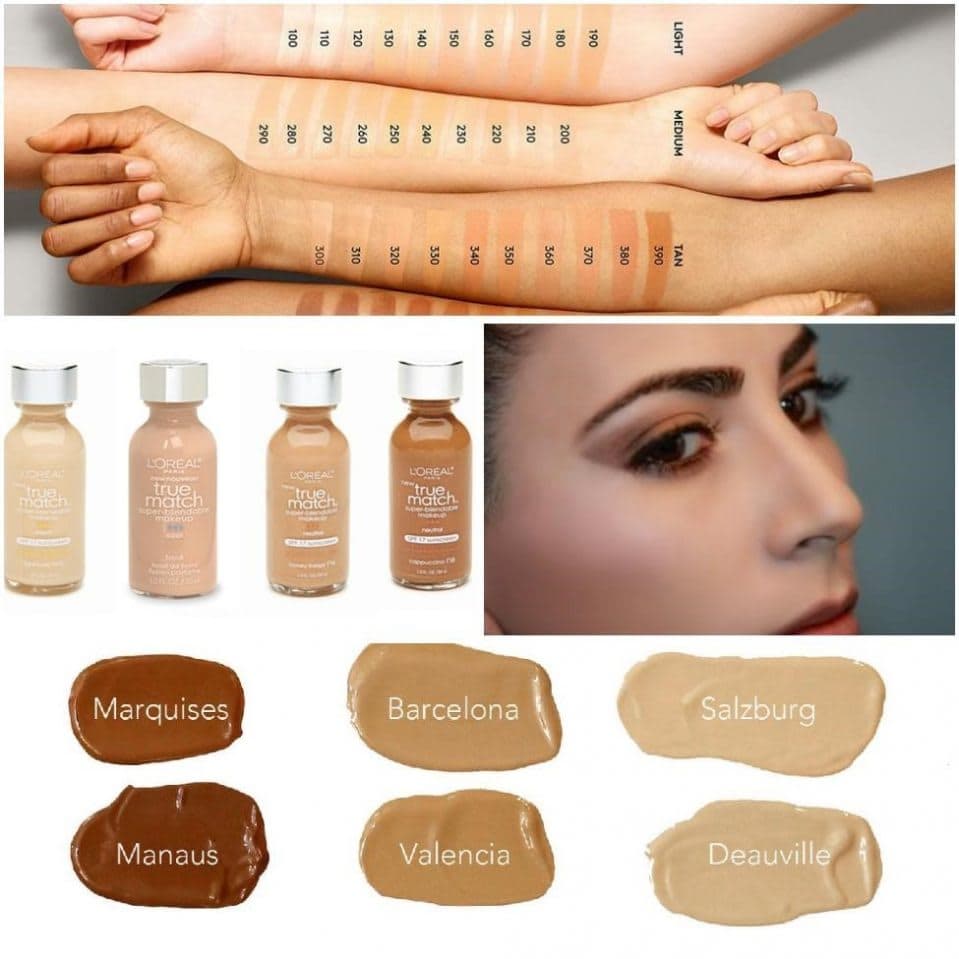
Understanding coverage levels helps you select a foundation that meets your specific needs and preferences. Coverage refers to how much your foundation will conceal imperfections and even out your skin tone.
Sheer Coverage
Sheer coverage foundations provide subtle color correction while allowing your natural skin texture to show through. They're perfect for those with relatively clear skin who want to enhance their natural beauty without looking made-up.
Best for: Clear skin, natural everyday looks, younger skin
Benefits: Lightweight feel, natural appearance, easy application
Medium Coverage
Medium coverage strikes the perfect balance between natural-looking and polished. These buildable formulas can be layered for additional coverage where needed.
Best for: Most skin types, versatile for day and night
Benefits: Conceals minor imperfections, buildable, natural finish
Full Coverage
Full coverage foundations offer maximum concealment for significant imperfections, scars, or hyperpigmentation. They're ideal for special occasions or when you want a flawless, airbrushed finish.
Best for: Problematic skin, special events, professional photography
Benefits: Complete coverage, long-lasting, dramatic results
How to Choose Your Perfect Foundation Shade
Selecting the right foundation shade is crucial for achieving a natural, seamless look. The wrong shade can make your makeup appear obvious and unflattering.
The Testing Process
Always test foundation on your jawline, not your hand or wrist, as these areas may differ significantly from your facial skin tone. Apply three potential shades along your jawline and observe which one disappears into your skin.
Test in natural light whenever possible, as artificial lighting can distort color perception. Step outside or near a window to see how the foundation looks in daylight.
Allow the foundation to oxidize for a few minutes after application, as some formulas darken slightly once they interact with your skin.
Professional Tips for Shade Selection
Choose a shade that matches your neck rather than your face, as your face may have more redness or discoloration. Your foundation should create a seamless transition from face to neck.
When in doubt, go slightly lighter rather than darker, as you can always add warmth with bronzer. A foundation that's too dark is much harder to correct than one that's slightly light.
Consider seasonal changes in your skin tone and have both a winter and summer shade if needed. Many people require slight adjustments as their skin tone changes throughout the year.
Application Tools Comparison
Fingers provide the most natural, skin-like finish as the warmth of your hands helps melt the product into your skin. This method works best for liquid and cream foundations and creates a seamless, natural look.
Makeup Sponges offer the most flawless, airbrushed finish when used damp. They're excellent for blending and building coverage gradually while preventing streaks.
Foundation Brushes provide the most precise application and work well for building coverage. Dense brushes offer more coverage, while stippling brushes create a lighter, more natural finish.
Step-by-Step Application Guide
- Prepare Your Skin: Start with clean, moisturized skin and apply primer if desired
- Apply Foundation: Dot foundation onto the center of your face (forehead, nose, cheeks, chin)
- Blend Outward: Work from the center of your face outward toward your hairline and jawline
- Build Coverage: Apply thin layers rather than one thick layer to avoid cakiness
- Set Your Foundation: Use powder or setting spray to lock your foundation in place
Making Your Foundation Last All Day
Long-lasting foundation requires proper preparation and setting techniques. Even the best foundation won't perform well without the right application and setting methods.
Preparation is Key
Start with a clean, well-moisturized face to create a smooth canvas for foundation application. Exfoliate regularly to remove dead skin cells that can cause foundation to look patchy.
Use a primer suited to your skin type – mattifying primers for oily skin, hydrating primers for dry skin, and color-correcting primers for specific concerns.
Setting Techniques
Apply setting powder lightly over your foundation to absorb excess oil and lock the foundation in place. Focus on areas that tend to get oily first, like the T-zone.
Use setting spray as a final step to seal your entire makeup look. Hold the spray 8-10 inches from your face and mist in an X and T pattern for even coverage.
Consider the layering technique: Foundation, powder, then setting spray for maximum longevity.
Application Mistakes
Applying too much foundation at once is one of the most common errors. Build coverage gradually with thin layers rather than applying one thick layer.
Not blending properly can result in visible lines and streaks. Take time to blend thoroughly, especially around the hairline and jawline.
Choosing the wrong undertone can make your foundation look orange or ashy. When in doubt, consult with a professional or use virtual try-on tools.
Product Selection Errors
Using the wrong formula for your skin type can cause foundation to slip, cake, or emphasize texture. Oily skin needs oil-free formulas, while dry skin requires hydrating formulations.
Ignoring the importance of primer can reduce foundation longevity and performance. Primer creates a smooth base and helps foundation adhere better.
Skincare-Foundation Hybrids
Serum foundations are gaining popularity for their lightweight feel and skincare benefits. These formulas combine coverage with ingredients like niacinamide, hyaluronic acid, and antioxidants.
Adaptive shade technology is emerging, with foundations that adjust to your skin tone for a more personalized match.
Clean Beauty Movement
Clean, non-toxic formulations are becoming increasingly important to consumers. Many brands are eliminating harmful ingredients like parabens, sulfates, and synthetic fragrances.
Sustainable packaging and refillable options are also trending as consumers become more environmentally conscious.
Natural Finish Focus
The "no-makeup makeup" look continues to dominate, with emphasis on skin-like finishes rather than heavy coverage. Glass skin and satin finishes are particularly popular for 2025.
Mid-Range Choices: NARS foundations are known for their extensive shade ranges and professional quality. Urban Decay offers long-wearing formulas with innovative technology.
Conclusion: Your Path to Foundation Success
Selecting the perfect foundation doesn't have to be overwhelming when you understand the fundamentals. Start by identifying your skin type and undertone, then choose a formula that addresses your specific needs and desired coverage level. Remember that application technique and tools are just as important as the product itself – take time to practice different methods to find what works best for your skin.
Don't be afraid to mix shades or formulas to create your perfect match, and remember that your foundation needs may change with seasons, age, or skin condition changes. Invest in quality tools and proper preparation techniques for the best results, and always set your foundation to ensure all-day wear.
Most importantly, your foundation should enhance your natural beauty, not mask it. The right foundation will give you confidence and create the perfect canvas for the rest of your makeup routine. Take time to experiment, ask for professional advice when needed, and remember that finding your perfect foundation is a journey worth taking for the flawless, confident look you deserve.
Pro Tip: Keep a photo of yourself in your perfect foundation on your phone as a reference when shopping for new shades or trying new brands – this visual reminder will help you maintain consistency in your foundation selection.